


Separation anxiety in dogs: the signs, the causes and a calmer way to leave
Why your dog panics when you go, the signs to watch for, and a calm routine for leaving the house.

You pick up your keys and your dog's whole body changes. The pacing starts, the whining follows you down the hall, and you spend the morning on the tram or at your desk wondering what the flat will look like when you get back. If this sounds familiar, you are not alone, and your dog is not being difficult on purpose.
Separation anxiety is widely misunderstood. Small, steady changes to how you leave, how you come home and how you fill those first quiet minutes can make a real difference.
Separation anxiety in dogs is fear, not anger. An anxious dog panics when left alone and may bark, drool, pace, refuse food or try to escape. You can help by making departures boring, breaking the link between your keys and your exit, and giving a long-lasting frozen lick toy before you go. Severe or worsening cases need your vet.
Is my dog angry that I left?
No. Dogs do not plan revenge, so the chewed shoe is not a message about your trip to the supermarket.
What looks like spite is usually panic. When an anxious dog is left alone, their body goes into a stress response. Their heart beats faster, they feel trapped, and all that nervous energy has to go somewhere. Gnawing a door frame or scratching near the entrance is often an attempt to get out and find you.
Scolding a dog when you get home teaches them nothing about being alone. It only makes your return feel less safe.
What are the signs of separation anxiety in dogs?
The clearest sign is stress that starts as you get ready to leave and fades when you come back. Damage to the home is only one part of the picture.
| Sign | What it can look like |
|---|---|
| Shadowing | Following you from room to room, especially in the minutes before you go out |
| Refusing food | Ignoring a treat or meal while alone, then eating as soon as you return |
| Barking, howling or whining | Noise that carries on long after the door closes, which neighbours often notice first |
| Heavy drooling or panting | Wet patches on the floor or bed, even on a cool day |
| Escape attempts | Scratching at doors, windows or the floor by the entrance |
| Toilet accidents | Puddles from a dog who is otherwise house trained |
| A frantic greeting | Jumping, panting and whining that takes a long time to settle |
Why does the way I leave matter so much?
Your dog reads your mood, so a big emotional goodbye tells them that something worrying is about to happen.
Do you crouch down for a long cuddle, use a sad, high voice and say sorry for going? It comes from love, but it turns your departure into an event, and your dog braces for it.
Leaving the house should be the most boring part of your dog's day.
Try this instead. Gather your things calmly, say nothing special and walk out. When you come home, keep it just as low-key. Put your bag down, ignore the jumping and wait five to ten minutes until your dog is relaxed. Then greet them warmly and quietly. Over time, they learn that you going and coming back is ordinary.
How do I stop my dog reacting to my keys and shoes?
Use the same cues many times without actually leaving, until they stop meaning anything.
Dogs are excellent at spotting patterns. Outdoor shoes, a coat zipping up and the jingle of keys can all become warning signs long before you reach the door.
Pick up the cues, then stay
- Pick up your keys, then sit down and read
- Put on your outdoor shoes, then make lunch
- Put on your coat, then water the plants
Practise at the door
- Open the front door, wait ten seconds, close it
- Step out for a moment, then come back in calmly
- Build up slowly to a minute or two
Repeat this a few times a day and stop before your dog gets worried. Done often enough, your keys go back to being noisy bits of metal.
Why does licking help an anxious dog settle?
Licking is a natural self-soothing behaviour, and a slow, steady task gives a worried dog something to focus on other than the closed door.
An ordinary biscuit is gone in seconds, which leaves the rest of the empty flat to worry about. A frozen filling inside a sturdy natural rubber toy has to be licked away one layer at a time, so it lasts.
The early part of your absence is often the hardest. If your dog spends those first minutes busy and content, many will settle and doze for the rest of the time. That is exactly the gap a frozen toy is meant to fill.
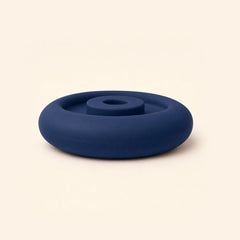
The Freez Doughnut offers up to 45 minutes of focused licking and chewing. The small (80 ml) suits dogs of 5 to 10 kg, and the large (120 ml) dogs of 10 to 20 kg.
“I really love these. They are long lasting and you can fill with whatever you want. Very durable. It's a very calming activity for my girl who is overstimulated.”
Erika B., verified buyer
What should I put in a frozen toy for an anxious dog?
Choose something your dog loves and only gets when you go out, so your departure starts to predict something good.
Good fillings
- Wet dog food or kibble soaked in water
- Plain, unsweetened yoghurt
- Bone broth made without onion or garlic
- Peanut butter that is free from xylitol
Leave out
- Chocolate, grapes and raisins
- Onion and garlic, including in stock cubes
- Anything sweetened with xylitol
- Cooked bones
Fill in layers and freeze overnight so the toy is solid by morning. The Freezbone recipe videos have plenty of ideas, and our Freezbone size guide helps you match a toy to your dog's weight and chewing style.
What is a good leaving routine for a dog with separation anxiety?
Prepare the night before, hand over the frozen toy a few minutes before you go, and slip out quietly while your dog is busy.
- Prep in the evening. Fill two or three toys with something your dog loves, such as kibble and bone broth, and stack them in the freezer.
- Give it early. Offer the frozen toy on your dog's bed about ten minutes before you need to leave, so they are already absorbed.
- Leave without a fuss. Pick up your keys and go while they are busy licking. No long goodbye.
- Come back calmly. Let the excitement fade, greet your dog once they are settled, then put the empty toy in the dishwasher.
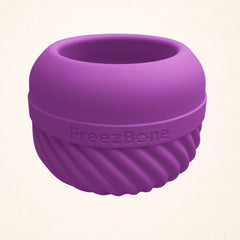
For bigger dogs, the FreezJumbo turns breakfast into a long, calm task. The large size holds up to 420 ml and the XXL up to 700 ml.
“Our sweet Bella loves freeze bone so much. She gets so excited when I make it at night and she gets it in the morning when I head off to work.”
Amanda W., verified buyer
How long can a dog with separation anxiety be left alone?
There is no single number that suits every dog, because age, health and the level of anxiety all play a part.
For a dog who panics, start with absences short enough that they stay calm, then build up slowly. On long days, a friend, a neighbour, a dog walker or daycare can break up the time. If you work from home some days, our guide to working from home with a dog shows how to practise short spells apart even while you are in.
When should I talk to my vet about separation anxiety?
Talk to your vet if your dog is hurting themselves, the stress is getting worse, or nothing seems to help.
- Your dog injures their paws, teeth or mouth trying to get out
- They will not eat or drink at all while alone
- The panic starts sooner or lasts longer each week
- Anxiety appears suddenly in an older dog, or comes with other changes in behaviour
- Toilet accidents happen even when you are at home
Your vet can check for a medical cause and may refer you to a qualified behaviour professional. Separation anxiety cannot be fixed overnight, but with patience most dogs can learn that being alone is safe. If big changes or loud nights make things worse, our plans for New Year's Eve fireworks and moving house with a dog may help too.
General information, not veterinary advice. If you're worried about your dog, talk to your vet.
Frequently asked questions
-
Puppies can find being alone hard, especially in their first weeks in a new home. Practising very short spells apart from the start, with a chew or frozen toy on their bed, helps them learn that you always come back. If the distress is intense or not improving, ask your vet.
-
Not always. Many anxious dogs are attached to their person rather than simply worried about being alone, so another dog may not help. Work on the leaving routine first, and speak to your vet or a behaviour professional before adding a second dog.
-
Only if your dog already sees the crate as a safe, relaxing place. Some anxious dogs panic more when shut in and can hurt themselves trying to get out. A safe room or a gated area with their bed and a frozen toy is often a better choice.
-
Yes, and it can help your departure feel like a good thing. Count the filling as part of your dog's daily food so they do not gain weight. Wash the toy after each use; Freezbone toys are dishwasher safe.
-
Yes, once they have calmed down. Wait until the frantic jumping stops, then greet them warmly and quietly. This keeps your return pleasant without turning it into a dramatic event.
Shop this guide
Buy 2 save 15% · 3 save 20% · 4 save 25%
-
Freez Doughnut
Got a pup with a powerful bite? Don't sweat it, we've got you...
€18,95
Shop Freez Doughnut - Super Durable Treat Toy -
FreezJumbo™
The FreezJumbo was created for dog parents who are done wasting money on toys...
€18,95
Shop FreezJumbo™ – Our Biggest & Toughest Enrichment Toy Ever -
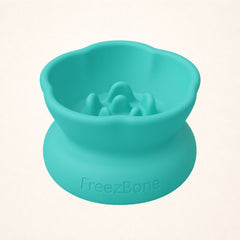
Freezflower Cup
Introducing the FreezFlower Cup, a thoughtfully designed enrichment cup featuring a flower-inspired design to...
€26,95
Shop Freezflower Cup - Frozen Treat Cup for Calm, Happy Dogs
Keep reading in Anxiety & Calm

New Year's Eve Fireworks and Your Dog: A Calm-Night Plan for Europe
Silvester, Oud en Nieuw, Nochevieja or Halloween in Ireland: a simple plan for before, during and after.

How to Make Vet Visits Less Stressful for Your Dog
Happy visits, handling practice and a calmer waiting room: small steps that make the vet less scary.

Adopting a Rescue Dog From Abroad: The First Weeks at Home
Arrival day, decompression, routine and trust: a gentle plan for a rescue dog who has come a long way.