


Living with a dog in a city flat: the complete guide for Europe
Enrichment, toilet breaks, lifts, neighbours and summer heat: what a city flat dog really needs.

A small flat in Dublin, Berlin, Lyon or Barcelona can be a wonderful home for a dog. You may not have a garden for long games of fetch, but dogs care far more about time with you, a steady routine and a busy brain than about square metres.
This guide covers what matters most for dogs in city apartments across Europe: tiring your dog out indoors, toilet breaks with no garden, lifts and stairs, noise, balconies, public transport and summer heat under the roof.
Yes, dogs can be very happy in a city flat. The key is to swap some running for mental work: sniff walks, short training games, food puzzles and frozen lick toys. Plan regular toilet breaks, teach calm manners in lifts and on stairs, keep balconies safe, and choose multi-use gear that fits a small home and a small freezer.
Can a dog be happy living in a flat?
Yes. A dog's wellbeing depends much more on daily exercise for the body and the mind than on the size of your home.
Physical exercise is only half of the picture. A dog who only runs tends to build stamina and then needs even more running. A dog who also uses their nose and brain every day is far more likely to settle calmly on the living room floor, however small it is.
How do I keep my dog busy in a small flat?
Choose short, calm activities that use your dog's nose and brain, rather than games that need a lot of floor space.
| Activity | Space you need | How to do it |
|---|---|---|
| Snuffle mat | About one square metre | Hide dry kibble in the fabric folds so your dog forages for each piece. |
| Frozen lick toy | A dog bed | Give a filled, frozen rubber toy for up to 45 minutes of calm, stationary licking. |
| Training games | A hallway | Practise impulse control: sit, stay, wait at the door and walking close beside you. |
| Find it | One room | Hide a few treats behind a chair leg or under a cushion and let your dog search. |
| Towel roll | A corner | Roll treats into an old towel for your dog to unroll, and stay close while they do it. |
A few minutes of brain work can tire a dog surprisingly well. Spread short sessions through the day, especially when Atlantic rain or a heatwave cuts walks short. Our ideas for indoor enrichment on short winter days work all year round.
Should I stop using a food bowl?
For many city dogs, serving some or all meals from a toy or puzzle is the easiest way to add enrichment every single day.
Your dog has to eat anyway, so turning a meal into a task costs no extra time and no extra space. Food that vanishes in seconds becomes a calm activity that lasts. In a small home, a toy that is a slow feeder, a calming treat and a boredom buster in one earns its place.
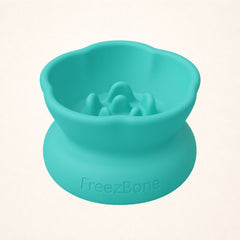
The Freezflower Cup works as an everyday feeder or a frozen treat. The small size holds 180 ml for dogs of 5 to 20 kg, and the large holds 320 ml for dogs of 20 to 40 kg. It is dishwasher safe, which helps in a small kitchen.
“I love the freeze flower. I can put her whole meal in it and can easily add treats .”
Patricia B., verified buyer
How do I fit frozen toys into a small freezer?
Pick flat or upright shapes, prepare a few at once, and use the freezer door shelves.
City freezers are often tiny, so a little planning keeps enrichment easy:
- Stand toys upright on the freezer door shelves to keep the drawers free.
- Choose flat shapes that stack, with a sheet of baking paper between them.
- Batch prep two or three at a time, so one is always ready.
- Rotate shapes through the week so your dog stays interested.
Fill toys while you cook dinner and they will be frozen by morning. The Freezbone recipe videos have quick ideas.
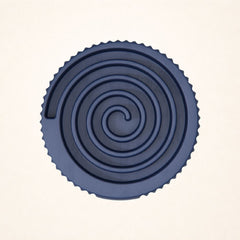
The FreezSwirl is a wide, flat spiral, 170 mm across, made for dogs of 10 to 40 kg. Its grooves hold liquid or soft fillings, so even plain broth becomes a long licking session.
“All the dogs love the spiral! It’s easy to fill and fit in a crowded freezer. Even just simple broth keeps them entertained.”
Alyssa C., verified buyer
How do I toilet train a dog without a garden?
Set a regular schedule of outdoor breaks, use the same spot each time, and reward your dog the moment they finish.
Without a back door to open, toilet trips need more planning. Most dogs do best with a predictable routine: first thing in the morning, after meals, after play and naps, and last thing at night. Puppies need to go out much more often.
Keep a lead, keys, poo bags and a rain jacket by the door so a quick trip downstairs is easy, even late at night. Always pick up after your dog. It keeps the neighbours on your side, and many towns and cities require it. For young dogs, our guide to house training a puppy in a flat goes step by step.
How do I handle stairs, lifts and shared hallways?
Keep your dog on a short lead in shared spaces, and teach them to wait calmly while doors open and people pass.
In the lift
- Let people get out before you step in
- Ask your dog to sit in a corner
- Wait for the next lift if it is crowded or someone looks nervous
On the stairs
- Walk slowly, with your dog close to you
- Carry small dogs and puppies on steep or open steps
- Ask your vet about stairs for older dogs or dogs with sore joints
At your front door
- Teach a calm "wait" before the door opens
- Check the corridor before stepping out
- Reward quiet behaviour every time
With neighbours
- Let your dog greet people only when invited
- Keep the lead short near children, prams and bikes
- Share your phone number in case of any problems
How can I stop my dog disturbing the neighbours?
Work out why your dog barks, then meet that need with exercise, enrichment and a calm routine.
Sound carries through walls, floors and stairwells, so barking matters more in a block of flats. Many buildings and towns also have quiet hours. Rules differ from place to place, so check your house rules or tenancy agreement.
Barking at noises in the corridor often eases with a radio, soft background sound or a bed placed away from the front door. Barking when alone can be a sign of distress, and our guide to separation anxiety in dogs explains how to help.
Is a balcony safe for my dog?
A balcony can be safe with secure railings, shade and supervision, but it is never a place to leave your dog alone.
- Check that gaps in the railings are too narrow for your dog to squeeze through, and add mesh if needed.
- Move chairs, plant pots and boxes away from the edge so your dog cannot climb.
- Balcony tiles can get very hot in summer sun, so offer shade and water, and bring your dog inside in the hottest hours.
Can I take my dog on public transport?
Often yes, but the rules differ by country, city and operator, so check before you travel.
Some networks let small dogs ride free in a carrier, while others ask for a ticket, a short lead or a muzzle for larger dogs. Practise short trips at quiet times first, bring water, and reward calm behaviour on the platform. For trips further afield, see our guide to travelling in Europe with your dog.
How do I keep a top-floor flat cool for my dog?
Block the sun early, offer cool floors and water, and plan quieter days when the heat builds under the roof.
Close blinds or shutters in the morning, let your dog lie on tiles, keep water in more than one room, and walk early and late. On the hottest afternoons, a frozen toy keeps your dog calm and busy indoors.
A small home is no barrier to a happy dog. Add daily sniff walks for city dogs, a few short brain games and a frozen toy waiting in the freezer, and your flat can be home to one of the calmest dogs in the building.
Frequently asked questions
-
There is no perfect size. Energy level and temperament matter more than weight, and some large, calm dogs adapt well to flats while some small, busy dogs find them harder. Think about stairs too, because a heavy dog who cannot manage steps may need help.
-
Most adult dogs need several outings a day for toilet breaks, plus time to sniff and explore. Puppies need to go out far more often, and older dogs may need extra trips. Your vet can advise on the right routine for your dog.
-
Many adult dogs cope with some time alone if they have been walked, fed and given something to do. Build up time alone gradually, and use a dog walker, a neighbour or daycare on long days. Puppies and anxious dogs need extra support.
-
Rules on pets in rented homes differ between countries and contracts. Check your tenancy agreement and any house rules for the building before your dog moves in. If in doubt, ask your landlord or property manager in writing.
-
Keep your dog's nails trimmed, lay rugs or runners on slippery areas, and serve frozen toys on a washable mat or towel. Rugs also help older dogs grip and soften the noise for the neighbours below.
Shop this guide
Buy 2 save 15% · 3 save 20% · 4 save 25%
-
FreezSwirl
Introducing the FreezSwirl—a versatile chew toy with a unique swirling design that takes your...
€28,95
Shop FreezSwirl - Durable Stimulation Toy -
Freezflower Cup
Introducing the FreezFlower Cup, a thoughtfully designed enrichment cup featuring a flower-inspired design to...
€26,95
Shop Freezflower Cup - Frozen Treat Cup for Calm, Happy Dogs -
FreezBall Bundle
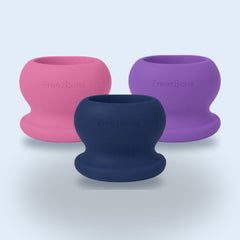
More balls, more fun, less prep. This bundle includes three FreezBall enrichment toys, giving your...
€47,85
Shop FreezBall Bundle — Best value on the most-loved bones
Keep reading in Enrichment & Boredom

Short Winter Days: 10 Indoor Enrichment Ideas That Tire Your Dog Out
Dark afternoons, rain and snow: ten indoor games and a simple daily plan to keep your dog happily tired.

Enrichment for Senior Dogs: Gentle Ways to Keep an Older Mind Busy
Easy, low-impact ideas to keep an older dog curious and content without straining tired joints.

Working from Home with a Dog: A Daily Routine That Works for You Both
A realistic working-day plan: walks, quiet time, video calls and when to hand over a frozen toy.